

Installing a new air conditioner is a decision that affects your comfort, energy use, and the way you experience your home throughout the year.
Most homeowners know they need reliable cooling, but the installation process itself often raises questions.
Which system is right for the property? Where should the indoor unit go? How long will installation take? What happens after the system is connected?
A professional air conditioner installation process answers these questions before the first tool is unpacked.
At Air Care, we help Gold Coast homeowners select and install air conditioning systems suited to their homes, from initial consultation through to final system testing. Our team provides residential air conditioning installation services designed around the requirements of Southeast Queensland properties.
Professional Air Conditioner Installation
An air conditioner is only as effective as the system selection and installation behind it.
Heating and cooling represent a significant part of household energy use in Australia. The Department of Climate Change, Energy, the Environment and Water reports that space heating and cooling account for around 40% of household energy use, which is why selecting and installing a system suited to the property is an important part of achieving reliable performance.
A correctly installed system should provide reliable comfort, operate efficiently, and suit the way the property is used.
Poor installation decisions can affect airflow, system performance, operating costs, and long-term reliability.
Correct system selection before installation begins
The installation process starts before the equipment arrives.
The right air conditioner depends on factors such as:
- The size and layout of the area being cooled
- The amount of sunlight and heat exposure
- Insulation and building design
- How frequently the space is used
- The level of control required
A bedroom, open-plan living area, and whole-home solution all have different requirements.
Selecting the correct system helps ensure the equipment matches the property.
Installation quality affects long-term performance
Professional installation involves more than mounting an indoor unit and connecting pipes.
The installer must consider airflow, positioning, drainage, electrical requirements, refrigerant handling, and system commissioning.
These details influence how effectively the system operates once it is switched on.
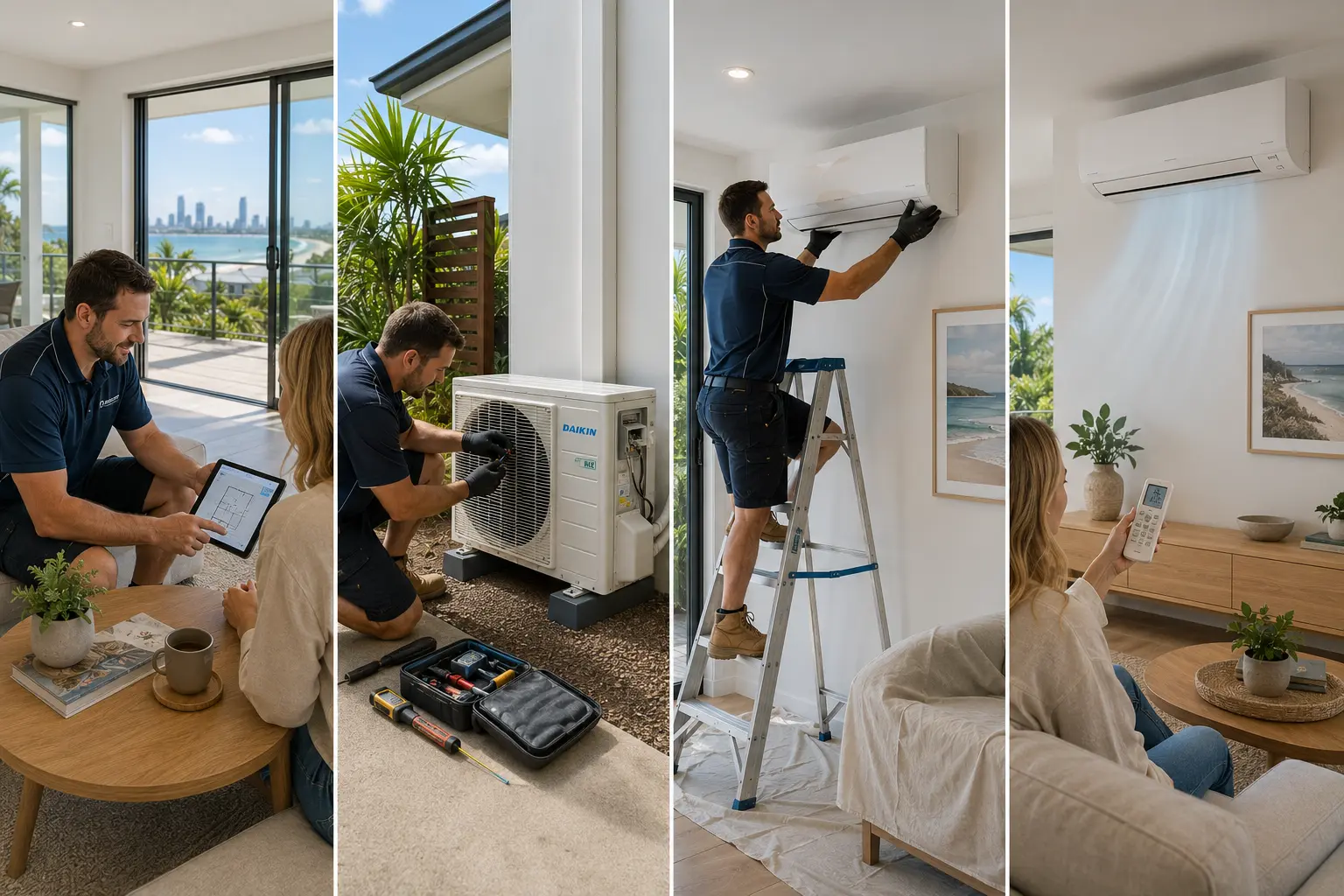
Step 1: Understanding Your Home and Cooling Requirements
Every installation begins with understanding what the homeowner wants to achieve.
Some properties need cooling in one frequently used room. Others require a solution that manages comfort throughout the entire home.
Assessing room layout and comfort needs
The layout of your home influences how air moves through each space.
A correctly positioned indoor unit can improve air distribution and help maintain consistent temperatures.
Factors such as room size, ceiling height, furniture placement, and room usage all contribute to choosing the right installation approach.
Choosing the right air conditioning system
Different homes require different solutions.
A split system may be suitable for individual rooms, while multi-split systems can provide separate control across several areas. Larger homes may benefit from ducted air conditioning that distributes air throughout multiple zones.
Air Care provides installation solutions across a range of residential air conditioning systems, helping homeowners choose options that suit their property and comfort needs.
Step 2: The Site Visit and Installation Planning Process
A site visit allows installation requirements to be assessed before work begins.
This stage helps identify the most practical locations for equipment and any factors that may affect the installation.
Selecting indoor and outdoor unit locations
The position of each component affects system operation and the appearance of the property.
Indoor units need to distribute air effectively, while outdoor units require suitable ventilation and access for future maintenance.
The installation team considers these requirements while keeping the property layout in mind.
Identifying installation requirements
During planning, installers assess requirements such as:
- Access to installation areas
- Electrical connections
- Drainage pathways
- Pipe and cable routes
- Structural considerations
Planning these details helps create a smoother installation process.
Step 3: Installing Your New Air Conditioning System
Once the system selection and installation plan are confirmed, the equipment can be installed.
The process varies depending on the system type and property, but every installation requires careful attention to detail.
Preparing equipment and installation areas
The installation team prepares the required components and ensures the work area is suitable.
This includes installing mounting brackets, preparing connection points, and positioning equipment correctly.
A neat installation also considers how the system fits within the appearance of the home.
Connecting and commissioning the system
After installation, the system is connected and checked to ensure it operates correctly.
Commissioning involves testing performance, checking operation, and confirming the system is ready for use.
This step verifies that the equipment is functioning as intended before the installation is complete.
Step 4: Testing, Demonstration and Final Checks
The final stage is making sure the homeowner understands their new system.
Confirming system operation
The installation team checks that cooling, heating, airflow, and controls are operating correctly.
Any adjustments needed can be identified before the job is completed.
Showing you how to use your new air conditioner
A new air conditioner may include features such as timers, operating modes, and temperature controls.
Understanding these functions helps homeowners use their system effectively from day one.
Common Air Conditioner Installation Mistakes to Avoid
Choosing based only on upfront price
Price is part of the decision, but it should not be the only factor.
A low cost installation may not provide the best outcome if the system is incorrectly sized, poorly positioned, or unsuitable for the property.
The right installation balances equipment choice, workmanship, and long-term performance.
Installing the wrong system for the property
A system designed for a different type of home may not deliver the comfort expected.
A professional assessment helps match the air conditioner to the actual requirements of the property.
Why Gold Coast Homeowners Choose Air Care for Installation
Air Care has more than 25 years of experience delivering climate control solutions across Southeast Queensland. The company provides residential and commercial air conditioning services, including system selection, installation, repairs, and maintenance.
Our approach focuses on understanding the property first, then recommending a system that aligns with the homeowner’s needs.
We work with major air conditioning brands and provide installation solutions designed for the region’s subtropical climate.
Choosing an Installer Who Understands Your Home
A successful air conditioner installation starts with choosing the right system and continues through careful planning, professional workmanship, and final testing.
The installation process should give you confidence that your system has been selected and installed correctly.
If you need air conditioner installation on the Gold Coast, Air Care can assess your home, discuss your options, and help you choose a solution designed for reliable comfort.
Contact Air Care today to arrange your installation consultation.