
Why This Matters for Your Building
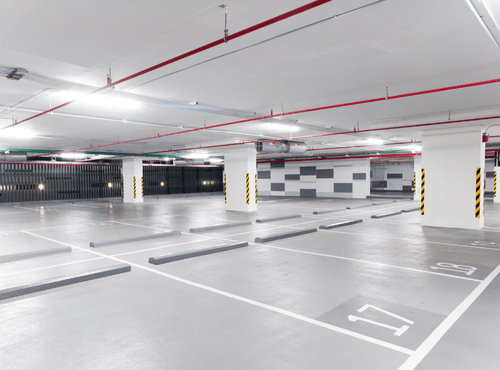
If your car park lacks proper ventilation, it’s not just inefficient – it’s illegal. Carbon monoxide (CO) build-up in enclosed or underground parking areas poses a serious health and safety hazard. Facility managers and developers across Southeast Queensland are now under increasing scrutiny to ensure their properties meet stringent National Construction Code (NCC) and AS 1668 standards.
Air Care Air Conditioning, based on the Gold Coast, designs, installs, and maintains compliant mechanical ventilation systems that eliminate risk, protect occupants, and keep buildings audit-ready. With over 25 years of commercial HVAC expertise, our systems ensure your facility meets every regulatory requirement for CO management and air quality.
Why Car Park Ventilation Isn’t Optional in Queensland
The Hidden Risk of Carbon Monoxide Exposure
Every petrol or diesel engine emits carbon monoxide – an odourless, colourless gas that can be fatal at high concentrations. In an enclosed or poorly ventilated car park, CO can accumulate rapidly, especially during peak entry and exit times. Even low levels can cause headaches, dizziness, and fatigue for building occupants or maintenance staff.
Queensland’s subtropical climate adds another layer of complexity: high humidity and fluctuating temperatures can intensify air stagnation, reducing natural ventilation efficiency. For this reason, the National Construction Code mandates that all enclosed car parks must have an approved mechanical ventilation system designed to limit CO levels to safe thresholds.
What the Law Requires for Compliance
Under AS 1668.2 – The Use of Ventilation and Air Conditioning in Buildings, car park ventilation systems must:
- Detects and controls CO concentrations automatically.
- Provide continuous airflow at prescribed minimum rates.
- Activate additional ventilation when gas levels rise.
- Comply with energy efficiency and fire safety standards.
Non-compliance can lead to regulatory fines, loss of occupancy certification, and increased liability in the event of a health or safety incident.
How Air Care Designs Compliant Car Park Ventilation Systems
Smart, Energy-Efficient CO Control
Air Care’s mechanical ventilation designs combine safety and efficiency. We engineer both mechanical extraction and jet fan (impulse) systems – the latter eliminating extensive ductwork by using strategically positioned high-velocity fans to push air toward central exhaust points.
Each system integrates CO monitoring sensors and variable speed drives, allowing fans to ramp up only when pollutant levels rise. This approach ensures consistent compliance while cutting unnecessary energy consumption by up to 40%.
Tailored Design for Every Car Park Layout
No two car parks are identical. Whether it’s a compact basement under a boutique apartment complex or a multi-level commercial facility, Air Care tailors each system to the site’s size, occupancy rate, and airflow dynamics.
Our engineers conduct detailed airflow mapping and computational modelling to determine optimal fan placement, air change rates, and exhaust pathways. Once installed, every system is commissioned, certified, and tested to confirm compliance with Queensland’s building and fire safety codes.
Proven Expertise in Commercial Mechanical Ventilation
Over 25 Years of Engineering Precision
Air Care Air Conditioning is one of Southeast Queensland’s most established mechanical ventilation specialists. Our technicians are ARCtick-certified (AU00123) and trained across all major HVAC brands. This ensures that every system we design, install, or maintain meets the highest standards of performance and environmental compliance.
We’ve delivered turnkey ventilation solutions for offices, high-rise developments, and major car park facilities across the Gold Coast, Tweed Heads, and Logan. Each project benefits from our proven ability to integrate ventilation seamlessly with existing HVAC, fire protection, and building automation systems.
Seamless Project Delivery
We work collaboratively with builders, developers, architects, and fire engineers to ensure systems are designed and installed without disrupting project timelines. From early design consultation through to commissioning and documentation, Air Care provides full lifecycle project support – a single partner accountable for compliance from concept to certification.
Avoid Downtime, Fines, and Liability – Choose Experience That Counts
Preventative Maintenance for Continuous Compliance
Even the most advanced system needs regular maintenance to stay compliant. Air Care provides tailored preventive maintenance plans for all car park ventilation systems, including CO sensor calibration, fan inspection, and performance testing.
Routine maintenance ensures that your system continues to operate safely and efficiently – protecting you from costly fines, equipment failures, and potential legal exposure. For critical sites, we offer after-hours and emergency response services with a four-hour onsite target for urgent breakdowns.
Certified Safety You Can Prove
Every Air Care installation comes with complete documentation – including commissioning reports, CO test results, and compliance certificates. These records provide verifiable proof of your building’s conformity with NCC and AS 1668 requirements, ensuring peace of mind during audits or insurance reviews.
Ready to Bring Your Facility Up to Code?
Non-compliance isn’t just a risk – it’s a liability. If your car park ventilation system hasn’t been assessed or serviced recently, now is the time to act.
Air Care Air Conditioning offers free site assessments across the Gold Coast, Tweed Heads, and Logan. Our certified team can identify potential hazards, evaluate airflow efficiency, and design a compliant, cost-effective upgrade or replacement plan.
Call Air Care today on 07 5508 1700 or visit air-care.com.au/contact-us/ to book your car park ventilation compliance assessment.
Questions Facility Managers Ask About Car Park Ventilation
Q1: What CO level is considered unsafe in a car park?
Under Australian Standards, CO levels should not exceed 30 parts per million (ppm) for extended periods. Mechanical systems must automatically increase ventilation when readings approach this limit.
Q2: How often should a car park ventilation system be serviced?
At minimum, systems should be inspected twice yearly, with CO sensors calibrated during each service. High-use car parks may require quarterly maintenance.
Q3: Can old systems be upgraded to meet new standards?
Yes. Air Care can retrofit existing systems with new jet fans, CO sensors, and control panels to meet current NCC and AS 1668 compliance requirements without major structural work.
Q4: What documentation do I need for compliance audits?
Facilities should maintain CO sensor calibration records, airflow test results, commissioning certificates, and maintenance logs – all of which Air Care provides following each service.